

- Article
- Related
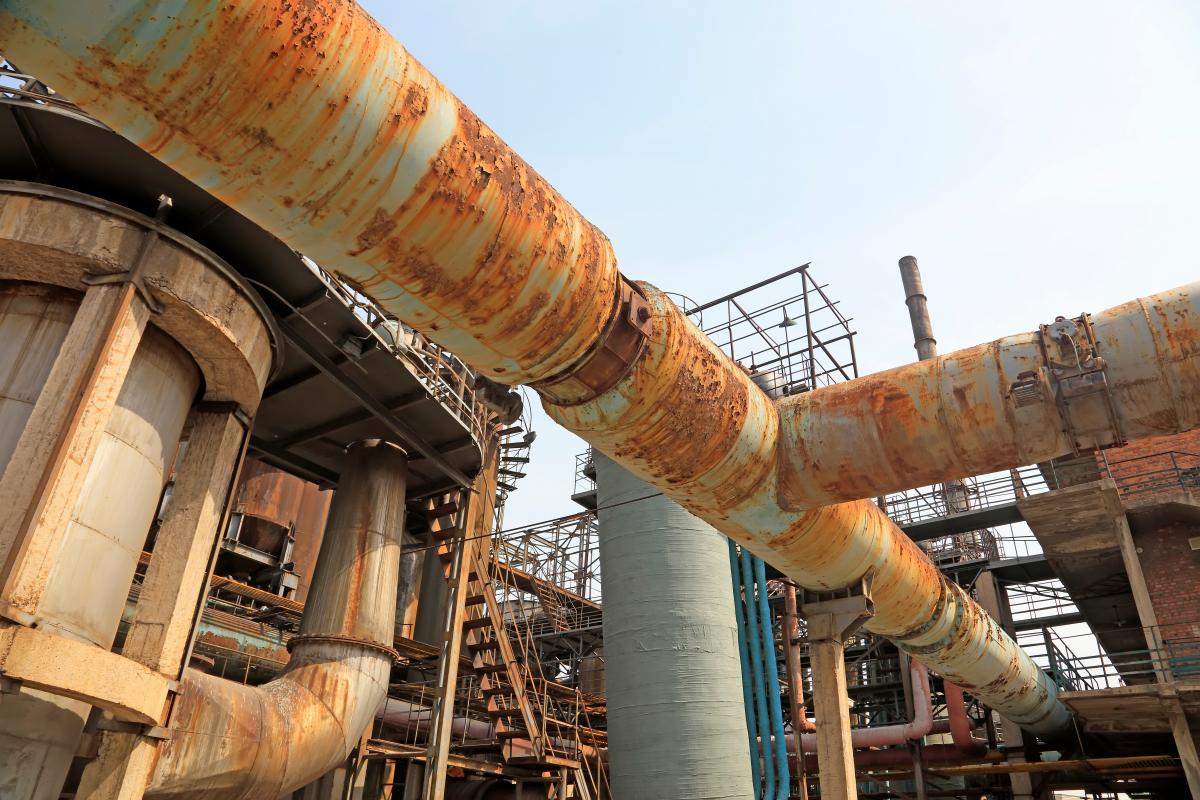
Aging and corroded infrastructure
Challenges: How do we manage the risk associated with aging infrastructure?
Though it’s not an option to repair all damages as they occur, it is still important to preserve the safety of installations by tracking and monitoring the damages (i.e., rigorously managing risks and following the evolution of damages over time to prioritize the repairs deemed urgent and critical). This is essential to avoid putting problematic infrastructure at risk and to allocate the proper resources to the right places to limit deterioration.What do we mean by risk management?
Ideally, 100% of the damages should be repaired; however, in the context of aging infrastructure, asset owners lack the human and financial resources to repair everything. The solution involves tracking and monitoring infrastructures over time, which involves digitizing measurements and comparing data between maintenance rounds. If damages become worse, service companies can prioritize and plan the repair in accordance with the damage severity.How can we limit damage progression?
Special paint, process modifications, or welded alloys can slow down the progression of certain damages and protect the infrastructure against the wrapping of composite materials. Nevertheless, service companies still must inspect repairs from time to time to ensure that the protective measures work. This is where 3D scanning comes into play, as it can detect the slightest change in a defect condition and dimensions.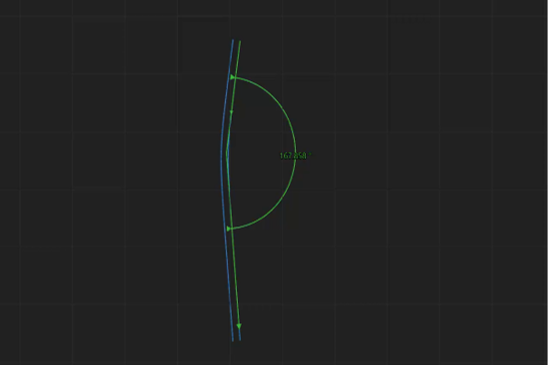
Radius bending measurement on a pipe cross-section to ensure that the pig can go through the pipe and carry out inspections
Benefits: Useful new metrics to anticipate repairs and limit downtimes
The combined effect of 3D scanning and VXintegrity provides asset owners with useful new metrics to make better maintenance decisions by anticipating repairs and limiting downtimes.
- Better decision-making
Asset owners can make better decisions thanks to the helpful new metrics that the Monitoring Module calculates very precisely. They can prioritize the order and sequence of repairs. Equipped with an overall picture of the situation, they can allocate the necessary resources to high-priority damage and wait to address less critical damage.
- Repair anticipation
Asset managers now know what to expect because 3D scan data is perfect for evaluating the evolution of damage over time and for noticing the slightest changes. With the corrosion rate that the Monitoring Module calculates, they know the precise loss of material, the progression of corrosion, and the remaining life of a component. They can anticipate and plan when to repair or replace a component without risking the proper functioning of the infrastructure.
- Limited downtimes
Monitoring damage evolution over time enables asset managers to plan maintenance upstream and prepare the refinery or power plant downtimes in advance. Downtimes will also be shorter because 3D scanning ensures that replacement parts will fit perfectly during installation.
NEED MORE INFORMATION ABOUT OUR SOLUTIONS?
